


Most organizations treat data governance as a compliance chore, a box to tick for regulators or auditors, but it’s far more than that. When approached strategically, data governance becomes a hidden lever for growth and innovation, shaping how businesses compete in a data-driven economy.
Rather than viewing governance as red tape, forward-thinking companies are reframing it as a competitive advantage. With trusted, well-managed data, they can make faster decisions, create better customer experiences, and unlock new opportunities for innovation.
In this article, we’ll explore why data governance is often overlooked, how it can fuel business agility and resilience, and the practical steps you can take to transform governance from a cost center into a growth engine. By the end, you’ll have a clear understanding of the frameworks, benefits, and strategies that turn governance into a long-term business advantage.
What is Data Governance, Really?
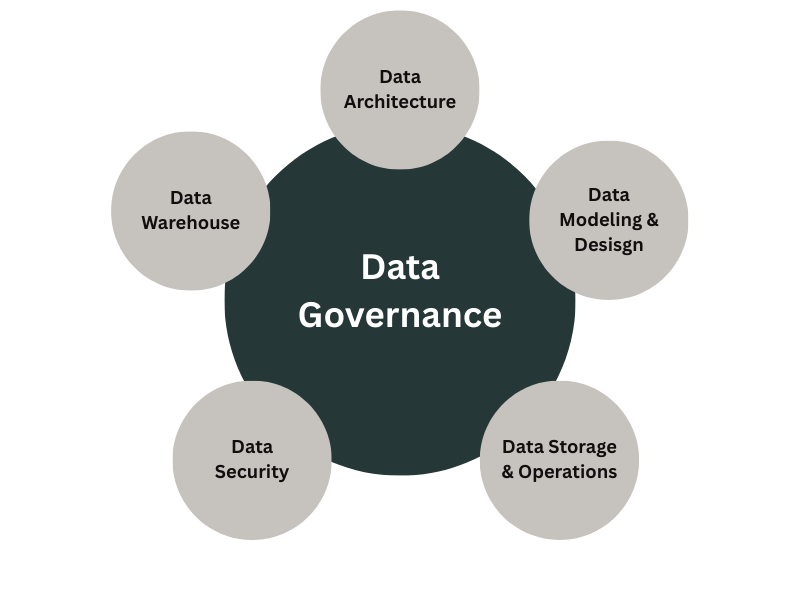
At its core, data governance is the discipline of establishing rules, processes, and responsibilities to ensure that data is accurate, consistent, secure, and usable across an organization. Many people think of it only in the context of compliance with laws such as CCPA or HIPAA, but governance extends far beyond meeting regulatory requirements. It is about making data reliable so it can be trusted as the foundation for business decisions.
It is also important to distinguish data governance from data management. Data management refers to the practical tasks of storing, organizing, and maintaining data systems, such as databases and data warehouses. Data governance, on the other hand, defines the policies and standards that guide how data is handled. In other words, governance provides the “rules of the game,” while management carries out the daily operations under those rules.
The value of governance comes from the trust it creates. When employees know they can rely on data to be accurate and consistent, they can make decisions with confidence. Governance also ensures that data is accessible to the right people at the right time, which prevents silos and enables collaboration. By embedding governance into business processes, organizations can turn raw information into a trusted strategic asset.
The Cost of Ignoring Data Governance
When organizations neglect data governance, the consequences are costly and far-reaching. One of the most common problems is the creation of data silos, where departments manage information independently without a unified standard. This leads to inconsistent definitions, duplicate records, and confusion about which version of the truth is correct. According to Gartner, poor data quality costs organizations an average of $12.9 million every year, largely because of wasted time and flawed decision-making.
Another risk is compliance failure. Companies that do not control how data is collected, stored, and accessed are more vulnerable to breaches of regulations such as CCPA, or HIPAA. Penalties for violations can run into millions of dollars, not to mention reputational damage that erodes customer trust.
The opportunity cost of bad data is equally significant. Inaccurate or inaccessible data slows down innovation, hinders effective decision-making, and reduces an organization’s ability to respond quickly to market changes. For example, a business that lacks reliable insights may lose market share to competitors that can identify trends and adapt faster.
Over time, the absence of strong governance leads to slower innovation, lost revenue, and declining credibility. Customers, partners, and stakeholders expect businesses to use data responsibly and effectively. Without governance, that expectation cannot be met, and the organization risks falling behind.
Data Governance as a Strategic Advantage
Strong data governance should not be seen as an obligation but as a strategic asset that enables organizations to compete more effectively. When data is accurate, consistent, and accessible, it becomes a foundation for innovation, agility, and trust, unlocking value that extends far beyond compliance.
With well-governed data, teams avoid duplication, reduce manual intervention, and streamline workflows. High-quality data practices allow organizations to automate processes and make faster, more reliable decisions. Leaders who trust their data can execute strategies confidently and adapt to changing market conditions with speed and precision.
Effective governance also provides the structure needed to scale emerging technologies responsibly. Artificial intelligence and machine learning initiatives, for example, depend on well-managed, high-quality data. Without governance, models trained on inconsistent or incomplete information can lead to unreliable outcomes. Strong governance ensures the accuracy, transparency, and scalability necessary for successful AI projects.
As markets evolve and regulations grow more complex, governance gives organizations a framework to adapt without major disruption. Companies that integrate governance into their strategy, such as Microsoft, which embeds data governance and responsible AI principles into its cloud and enterprise platforms, are able to innovate securely while maintaining compliance and customer trust.
When treated as a strategic advantage, data governance becomes a driver of efficiency, innovation, and resilience. It shifts from a back-office function to a core capability that sustains long-term competitive growth in a data-driven economy.
Implementing a Winning Data Governance Strategy
Turning data governance into a competitive advantage requires more than policies written on paper. It demands a deliberate strategy built on people, processes, and technology, combined with a culture of accountability.
Effective governance begins with defining roles and responsibilities. Data owners, stewards, and users must understand who is accountable for data quality and compliance. Processes such as data classification, access control, and quality checks ensure consistency and reliability. Technology, including governance platforms and automation tools, supports these processes by monitoring data usage and enforcing standards. The Data Management Association (DAMA) framework highlights these three pillars, people, processes and technology, as the foundation of a strong governance program.
Governance succeeds only when people across the organization embrace responsibility for data. Leaders must communicate that data is a strategic asset and not just an IT issue. Training programs and data literacy initiatives help employees understand the impact of their actions on data quality and security.
Modern governance relies on tools such as data catalogs, lineage tracking systems, and stewardship programs. Platforms like Collibra, Alation, or Microsoft Purview make it easier to manage metadata, track compliance, and improve discoverability. Frameworks like DAMA-DMBOK or COBIT provide structured approaches for defining and scaling governance initiatives.
Practical steps to get started
Organizations can take several actionable steps to build momentum:
- Assess current maturity by identifying data quality issues, gaps in accountability, and compliance risks.
- Define clear ownership by appointing data stewards and establishing a governance council.
- Set measurable goals such as reducing duplicate records, improving reporting accuracy, or meeting regulatory standards.
- Deploy enabling technology to centralize data assets and automate quality checks.
- Communicate and train to embed governance in daily operations and encourage adoption.
By aligning people, processes, and technology under a unified vision, businesses can build governance programs that not only reduce risk but also create measurable value. A thoughtful strategy turns governance from a compliance exercise into a driver of efficiency, trust, and growth.
Conclusion
Data governance is often misunderstood as a burden, but in reality, it is one of the most powerful tools for creating sustainable competitive advantage. Organizations that treat governance as a strategic asset are able to improve efficiency, deliver better customer experiences, make faster data-driven decisions, and build resilience in the face of regulatory or market changes.
The real differentiator is not just collecting data, but ensuring it is trusted, consistent, and accessible across the business. Companies that ignore governance risk falling behind, while those that embrace it position themselves for innovation and long-term growth.
If your organization is ready to move beyond compliance and unlock the true value of its data, Analitifi can help. Our solutions are designed to build strong governance foundations, improve data quality, and enable smarter decisions that drive competitive advantage.
Contact Analitifi today to start building a data governance strategy that fuels growth, trust, and innovation.